
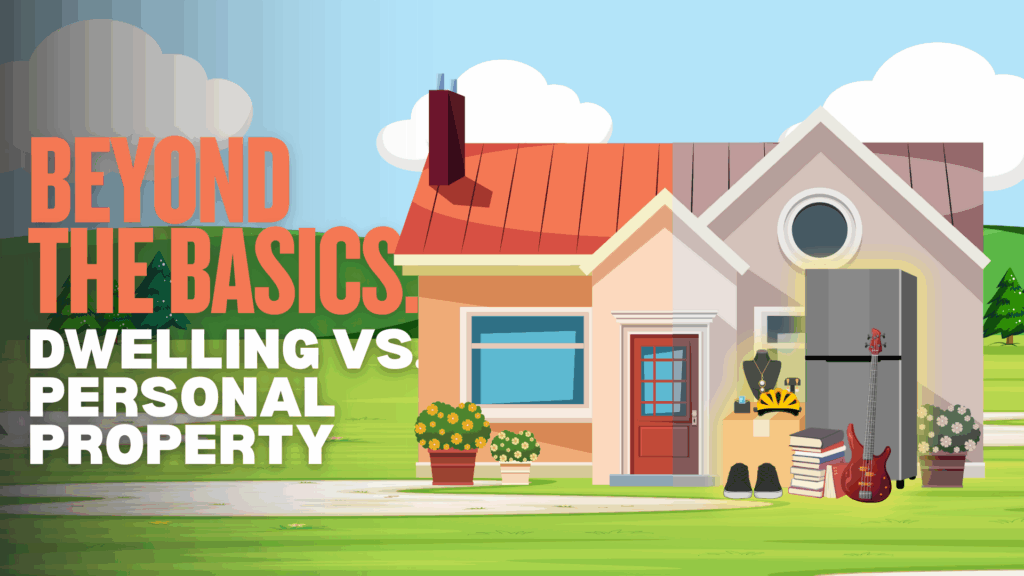
Buying a home is one of the biggest investments you’ll ever make, and protecting it with the right insurance policy is non-negotiable. But when you look at your homeowners policy, it can feel like a jumble of terms and numbers. While you may understand the general idea of home insurance, do you know what specific parts of your policy do? At Priority Risk Management, we often find that one of the most common areas of confusion for Indianapolis homeowners is the difference between Dwelling and Personal Property coverage.
Understanding these two core components is key to ensuring you’re fully protected if disaster strikes. Let’s break it down.
Dwelling Coverage: Protecting the Structure Itself

Think of Dwelling Coverage, also known as Coverage A, as the fortress. This is the part of your policy that protects the physical structure of your home and any attached structures. This includes:
- The walls, roof, and foundation
- Attached garages or carports
- Porches and decks
- Built-in appliances and fixtures like sinks and furnaces
If a fire rips through your home, a severe storm damages your roof, or a fallen tree crushes your attached garage, Dwelling Coverage is what pays to repair or rebuild that physical structure. The amount of coverage is typically based on the estimated cost to rebuild your home from the ground up, not its market value.
Personal Property Coverage: Protecting Your Stuff

Now, think of Personal Property Coverage, or Coverage C, as everything inside the fortress. This coverage protects your personal belongings, regardless of where they are in the world. This includes items like:
- Furniture and electronics (TVs, laptops)
- Clothing and jewelry
- Appliances that aren’t built-in (e.g., a microwave)
- Tools and sporting equipment
If your home in Broad Ripple is hit by a tornado and your belongings are destroyed, this coverage would help pay to replace your clothes and furniture. Personal Property Coverage is also valuable if your items are stolen from your car while you’re out, or if your laptop is lost while you’re on vacation.
Most policies offer two types of Personal Property coverage:
- Actual Cash Value (ACV): This pays to replace an item minus depreciation. For example, if a 10-year-old couch is destroyed, ACV would only pay for its depreciated value, not the cost of a new one.
- Replacement Cost Value (RCV): This is the superior option, as it pays to replace the item with a new one of similar quality and kind, without deducting for depreciation.
The Crucial Connection: How They Work Together
The key takeaway is that these two coverages work in tandem. Imagine your home is severely damaged by a fire.
- Dwelling Coverage would cover the cost to rebuild the walls and replace the roof.
- Personal Property Coverage would cover the cost to replace the charred furniture, electronics, and clothing inside.
For this reason, it’s vital to ensure you have adequate limits for both. While your Dwelling Coverage amount is often determined by a professional estimate, you are in charge of selecting your Personal Property limit. We recommend creating a home inventory—a simple list of your belongings with approximate values—to ensure your coverage matches your needs.
We’re Here to Help
Navigating these details can be complex, but you don’t have to do it alone. At Priority Risk Management, we are an independent insurance agency right here in Indianapolis. We work with multiple top-rated carriers, which means we can shop around to find a policy that not only provides the right level of Dwelling and Personal Property coverage but also fits your budget.
Don’t guess when it comes to protecting your most valuable assets. Contact us today for a free policy review or a no-obligation quote. We’ll help you turn the confusion into confidence.